The Best Used Electric Cars for Canadian Winters (And Which Ones to Avoid)
Canadian winters are the ultimate stress test for electric vehicles.
Cold temperatures reduce battery efficiency, increase cabin heating demands, and expose weaknesses in thermal management systems. Some EVs handle this beautifully. Others… not so much.
If you’re shopping for a used electric car in Canada, winter performance should be near the top of your checklist — right alongside price and battery health.
The good news?
Modern EVs are far better in winter than early models, and the used market now offers several excellent cold-weather performers at reasonable prices.
Let’s break down what actually matters, then look at the best used EVs for Canadian winters — and a few you should approach carefully.
What Makes an EV Good for Winter Driving?
Not all electric vehicles are created equal when temperatures drop below freezing. Winter performance comes down to how efficiently the car manages heat — both for you and the battery.
Here’s what to look for.
1. Heat Pump Heating (Huge Advantage)
A heat pump uses ambient heat rather than generating heat electrically. For more on the importance of heatpumps in the Canadian winter. Compared to older resistive heaters, heat pumps can be:
30–50% more efficient
Responsible for significantly less winter range loss
Especially effective in temperatures between 0°C and −15°C (most Canadian winter days)
EVs without heat pumps rely on energy-hungry resistive heaters, which can drain range quickly.
2. Active Battery Thermal Management
This is critical — and often misunderstood.
A proper thermal management system:
Actively heats and cools the battery
Keeps cells within an optimal temperature range
Improves winter range, charging speed, and long-term battery health
EVs without active thermal management suffer more:
Slower winter charging
Greater battery degradation over time
Bigger range drops in cold snaps
3. All-Wheel Drive (Helpful, Not Mandatory)
AWD improves traction in snow, but it’s not a requirement for winter success.
What matters more:
Good winter tires
Predictable power delivery (EVs excel here)
Weight distribution (battery packs help)
That said, AWD can be a big confidence booster for rural drivers or mountain regions.
Our Top Picks: Best Used EVs for Canadian Winters

5
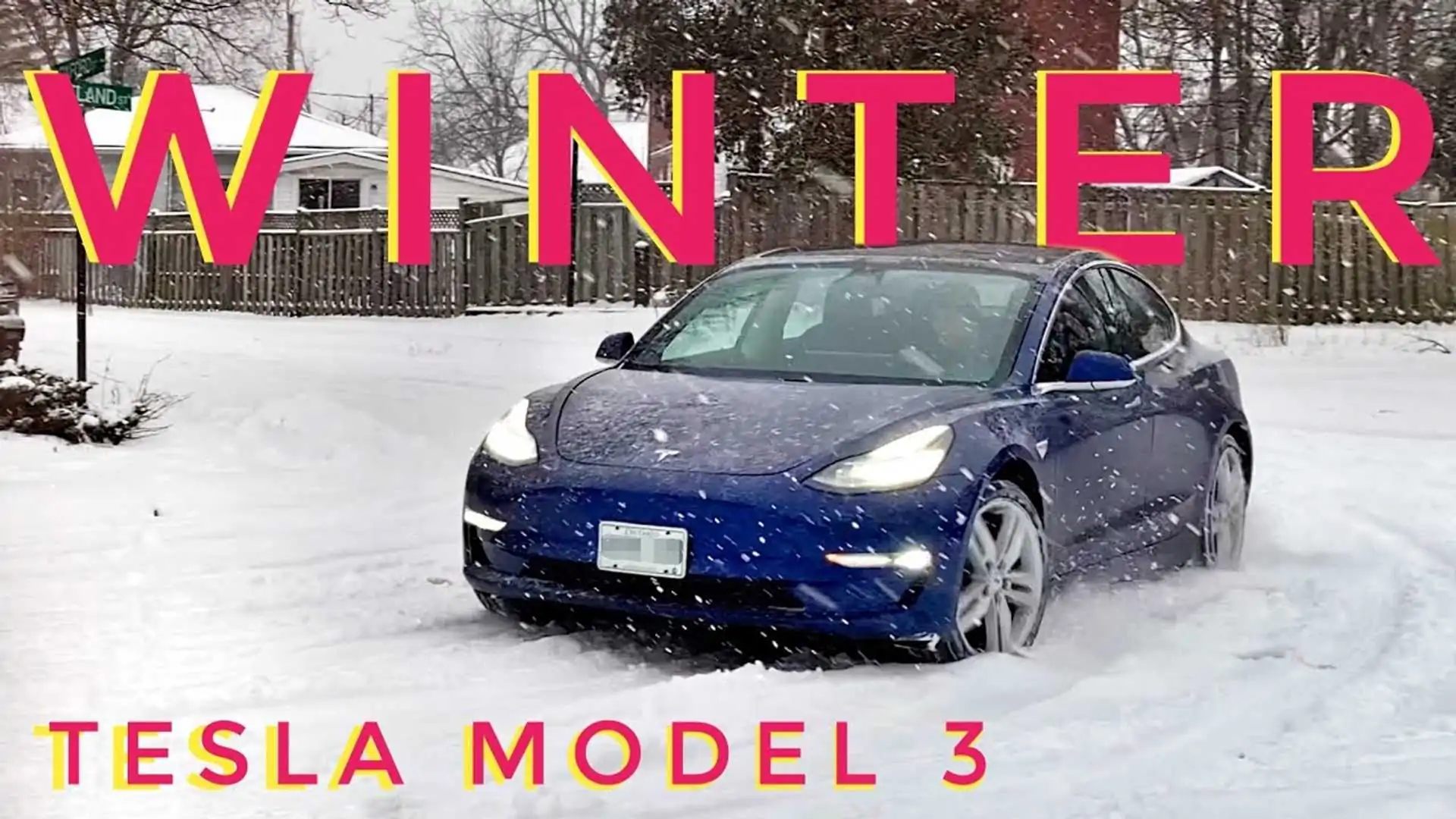
1. Tesla Model 3 (2021+) — Best Overall Winter EV
Tesla quietly fixed most of the Model 3’s early winter weaknesses in 2021.
Why it works:
Heat pump standard
Excellent battery thermal management
Strong charging network coverage
Predictable traction control in snow
Real-world winter performance:
Roughly 75–80% range retention at −20°C
Faster winter fast-charging than most competitors
Why buy used:
Heavy depreciation from early years
Large supply from off-lease returns
Still feels modern inside and out
Watch for: Earlier models without heat pumps (see caution list below)
2. Hyundai Kona Electric (2019–2023) — Best Winter Value
The Kona Electric is one of the most underrated used EVs in Canada.
Why it works:
Liquid-cooled battery
Efficient drivetrain
Available heat pump on many trims
Compact size warms up quickly
Specs that matter:
415 km rated range
Consistent winter efficiency
Proven long-term battery durability
Why buy used:
Strong reliability record
Excellent price-to-range ratio
Easy transition for gas-car converts
Watch for: Confirm heat pump availability by trim and model year
3. Chevrolet Bolt EUV (2022+) — Best Budget Winter EV
The Bolt EUV fixed several issues found in earlier Bolt models.
Why it works:
Improved battery thermal management
Stable winter handling
Excellent one-pedal driving, which shines on slippery roads
Winter reality:
No heat pump, but efficiency is still respectable
Shorter fast-charging sessions suit city driving
Why buy used:
Aggressive pricing post-recall
Simple, durable design
Great for urban and suburban winter driving
Watch for: Slower DC fast-charging speeds on road trips
4. Ford Mustang Mach-E (2021+) — Best AWD Option
If winter traction is high on your priority list, the Mach-E delivers.
Why it works:
AWD available
Heat pump standard on later trims
Strong ground clearance (≈147 mm)
Well-tuned stability control
Winter strengths:
Confident in snow and slush
Comfortable highway cruiser in cold weather
Why buy used:
Early depreciation is steep
Big interior space for winter gear
Familiar Ford ergonomics
Watch for: Software updates — ensure recalls and updates are current
5. Volkswagen ID.4 (2021+) — Best European Engineering
The ID.4 is quietly excellent in winter conditions.
Why it works:
Automatic battery preconditioning
Heat pump available on some trims
AWD option in later models
Solid ride quality on rough winter roads
Winter reality:
Predictable range loss
Good cabin insulation
Slower infotainment, but strong fundamentals
Why buy used:
Competitive pricing
Comfortable and refined
Excellent family EV for cold climates
EVs to Approach Carefully in Canadian Winters
Not all used EVs are bad — but some require extra caution if winter driving is part of your daily reality.
Early Tesla Model 3 (2017–2020)
Resistive cabin heating
Larger winter range loss
Still drivable, but less efficient
Nissan LEAF (All Years)
No active battery thermal management
Faster winter degradation
Charging slows significantly in cold weather
BMW i3
Limited range to begin with
Winter losses make highway trips difficult
Best suited as a city-only second car
Final Thoughts: Winter-Ready EVs Exist — You Just Have to Choose Right
Canadian winters don’t make EV ownership impossible — they simply reward informed buyers.
The right used electric car can:
Start reliably at −30°C
Keep most of its range
Charge predictably
Feel confident on snow-covered roads
Focus on heat pumps, battery thermal management, and real-world winter data, not just advertised range.
Choose wisely, and a used EV can be just as winter-ready as any gas car — often better.