Is Buying a Used Electric Car Worth It in Canada?
An Honest Look at Costs, Batteries, and Long-Term Value
The Canadian used EV market has grown up fast.
Just a few years ago, shopping for a used electric vehicle meant slim pickings, outdated tech, and plenty of uncertainty. Today, it’s a very different story. With thousands of off-lease electric vehicles hitting the market, Canadians now have more choice, better pricing, and far more real-world data to lean on.
So the big question remains:
Is buying a used electric car actually worth it?
The short answer is yes — for most drivers, it absolutely is.
But (and this matters) there are a few important caveats you need to understand before jumping in.
Let’s break it down.
The Case for Buying a Used Electric Vehicle
If there’s one thing that works heavily in your favour as a used EV buyer, it’s depreciation.
Electric vehicles tend to lose value faster than gasoline cars in their first few years, especially once the original incentives, novelty, and early-adopter premiums wear off.
A great real-world example:
A Tesla Model 3 that sold for around $60,000 new can often be found for $35,000–$40,000 after three years.
That’s a massive drop — and for buyers, it’s an opportunity.
You’re not losing the “EV experience” when you buy used. You still get:
Instant torque
Quiet driving
Home charging convenience
Strong tech features
Significantly lower running costs
You’re simply letting someone else absorb the steepest part of the depreciation curve.
Fewer Moving Parts, Fewer Headaches
One of the biggest long-term advantages of electric vehicles — new or used — is mechanical simplicity.
Compared to gasoline cars, EVs eliminate a long list of traditional failure points:
No engine oil changes
No transmission rebuilds
No timing belts
No exhaust systems
No spark plugs or fuel injectors
Thanks to regenerative braking, brake pads and rotors also last much longer than on ICE vehicles.
For many owners, this translates to:
Fewer unexpected repairs
Lower annual maintenance costs
Less time spent at the shop
This simplicity is a big reason used EVs tend to age better mechanically than many gas cars.
Understanding EV Depreciation Patterns
Not all electric vehicles depreciate the same way — and this is where informed buyers can really win.
Some trends we consistently see in Canada:
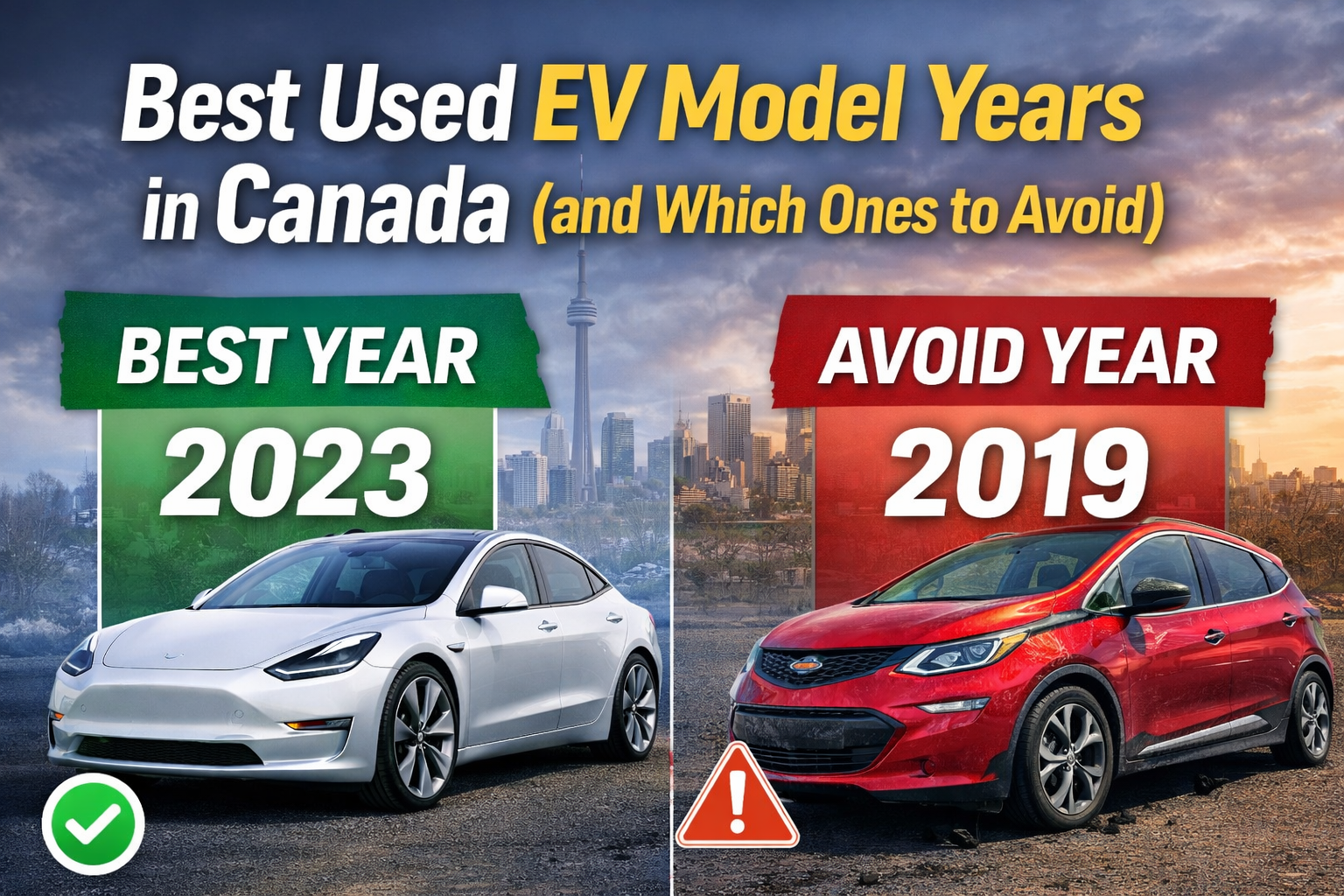
Early-generation EVs (especially those with smaller batteries) have dropped sharply in value
Older Nissan Leafs are a classic example, particularly models without active battery cooling
Longer-range EVs with better charging access tend to hold value better
Strong brand ecosystems and charging networks help stabilize resale prices
The takeaway?
You’re not just buying “an EV” — you’re buying a specific battery size, charging ecosystem, and generation of tech.
This is why understanding model years, battery upgrades, and real-world range is critical when shopping used.
Battery Health: The Heart of Any Used EV
Let’s address the elephant in the room.
Yes — the battery is the most important component in an electric vehicle, and it’s the number one concern for used buyers.
The good news?
Modern lithium-ion EV batteries are far more durable than most people expect.
What we know today:
Most manufacturers warranty EV batteries for 8 years or 160,000 km
(Used EV Warranties Explained)Real-world data shows many batteries retain 80–90% of capacity well beyond warranty
(How to Check EV Battery Health Before Buying)Battery degradation tends to be gradual, not sudden
That said, battery health still matters — a lot.
When buying used, you should always:
Check remaining battery warranty
Look for battery health reports where available
Understand how climate (hello, Canadian winters) affects longevity
(How Much Range Do You Really Lose in Winter?)
A well-maintained battery is the difference between a great used EV and a frustrating one.
Total Cost of Ownership: Where Used EVs Shine
The real value of a used electric car becomes obvious when you look beyond the purchase price.
Here’s what Canadian owners typically see:
Fuel Savings
Charging an EV costs roughly ¼ to ⅕ the price of gasoline, depending on your province’s electricity rates and how often you charge at home.
Maintenance Savings
With fewer service items, many drivers save:
$500–$1,000 per year compared to a similar gas vehicle
Insurance Considerations
Insurance can be:
Slightly higher due to repair costs and parts availability
Highly dependent on model, location, and driver profile
This is one area where it pays to get quotes before buying.
The Verdict: Is a Used EV Worth It?
For most Canadian drivers, the answer is a confident yes.
A used electric vehicle offers:
Lower upfront cost
Significantly reduced operating expenses
Fewer mechanical headaches
A quieter, smoother daily driving experience
The key is buying the right used EV, not just the cheapest one.
Understand the battery, know the depreciation curve, and match the vehicle to your real-world driving needs — especially in Canadian conditions.
Do that, and a used EV isn’t just worth it — it’s one of the smartest car buys you can make today.