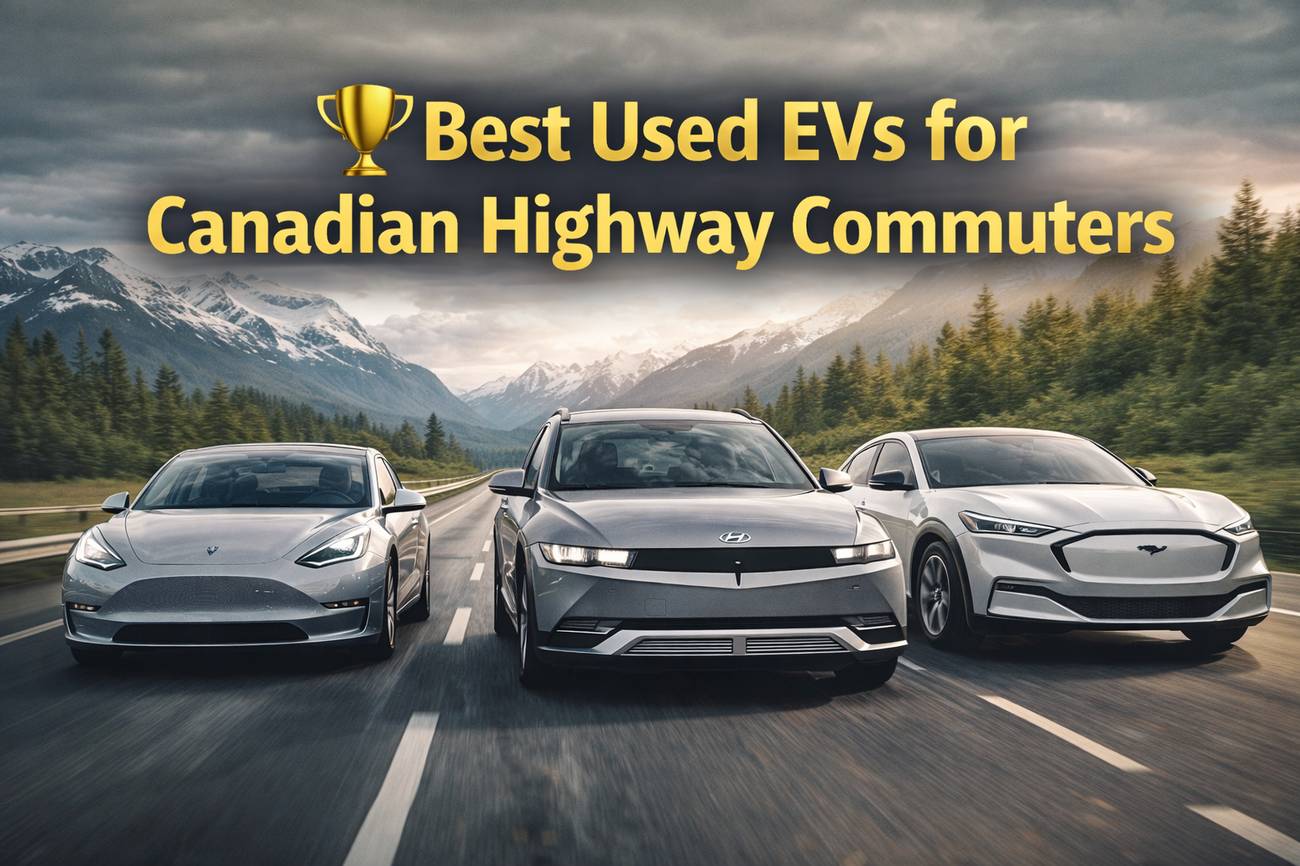
🏆 Best Used EVs for Canadian Highway Commuters
1️⃣ Tesla Model 3 (Long Range)
Why it works:
Excellent highway efficiency
450–500 km real-world range (Long Range trim)
Strong fast-charging network access
Good winter traction with AWD models
The Model 3 Long Range remains one of the most efficient EVs at highway speeds.
Even used, many examples still carry battery warranty coverage.
👉 Charging context:
Tesla vs CCS Charging in Canada
https://usedelectriccarscanada.ca/charging-costs/tesla-vs-ccs-canada
2️⃣ Hyundai Ioniq 5
Built on the E-GMP platform, the Ioniq 5 offers:
400–480 km rated range (Long Range)
800V ultra-fast charging
Excellent ride comfort
Strong winter capability (heat pump equipped trims)
For commuters doing long highway runs, fast charging matters less daily — but it provides peace of mind for unexpected detours.
3️⃣ Kia EV6
Very similar mechanically to the Ioniq 5 but with slightly sportier tuning.
Strengths:
Excellent highway stability
Strong cold-weather efficiency
Rapid DC fast charging
AWD options for snow
👉 Full deep dive:
The Breakdown: Kia EV6
https://usedelectriccarscanada.ca/the-breakdown/the-breakdown-kia-ev6
4️⃣ Ford Mustang Mach-E (Extended Range)
The Mach-E is slightly less efficient than Model 3, but:
Comfortable at highway speeds
Solid 400+ km range (Extended Range)
Good AWD winter performance
Make sure you’re looking at the Extended Range version — the Standard Range may feel tight for heavy commuters in winter.
5️⃣ Chevrolet Bolt EUV (Budget Option)
If your commute is 120 km and you can charge nightly:
400 km rated range
Affordable used pricing
Lower upfront cost
However:
Slower DC fast charging
Slightly less comfortable for very long daily highway drives
👉 Cost context:
The Real Cost of EV Ownership After 5 Years
/charging-costs/the-true-cost-of-owning-a-used-ev-in-canada-year-1-to-year-5
❄️ Winter Matters More for Commuters
If you’re driving 120–160 km per day in Canada, winter becomes critical.
Look for:
Heat pump equipped models
AWD if snow is frequent
Efficient cabin heating systems
Good winter tires (non-negotiable)
👉 Related:
Best EVs for Canadian Winters
https://usedelectriccarscanada.ca/winter-climate/best-evs-for-winter
⚡ Charging Strategy for Highway Commuters
Most long-distance commuters do 95% of charging at home.
Fast charging becomes:
Backup for missed charges
Road trip support
Emergency buffer
If you can install Level 2 charging at home, a 120 km commute is very manageable for most 400+ km EVs.
👉 Related:
Home Charging Guide
https://usedelectriccarscanada.ca/charging-costs/home-charging-guide
🔄 Battery Longevity & High Mileage Driving
Driving 35,000 km per year isn’t harmful to modern EV batteries.
In fact:
Frequent moderate cycling is often healthy
Most degradation occurs early and then stabilizes
Many batteries retain 85–90% capacity after 5–6 years
For high-mileage commuters, warranty coverage matters more than fear-based assumptions.
👉 Related:
Used EV Battery Warranties Explained
https://usedelectriccarscanada.ca/buying-guides/used-ev-battery-warranties
What Actually Matters for Highway EV Range
Before the list, it’s important to understand what separates highway champs from city stars.
Key Factors That Affect Highway Range
Aerodynamics (more important than weight)
Battery size
Drivetrain efficiency
Heat pump availability
Charging curve stability
Reliable fast-charging access
This is why some EVs with similar rated range feel very different on the open road.
Winter losses amplify these differences quickly.
(How Much Range Do You Really Lose in Winter?)
More Long-Range Highway Picks
Tesla Model Y (Long Range, 2020–2022)
The Best Long-Range Electric SUV
The Model Y sacrifices a bit of efficiency for space — but remains one of the strongest highway EVs you can buy used.
Why it works:
Strong efficiency for an SUV
Heat pump standard
Massive cargo capacity
Excellent Supercharger access
Stable winter performance
Real-world highway range:
Summer: 430–470 km
Winter: 300–350 km
Best for:
Families, gear-heavy trips, one-vehicle households
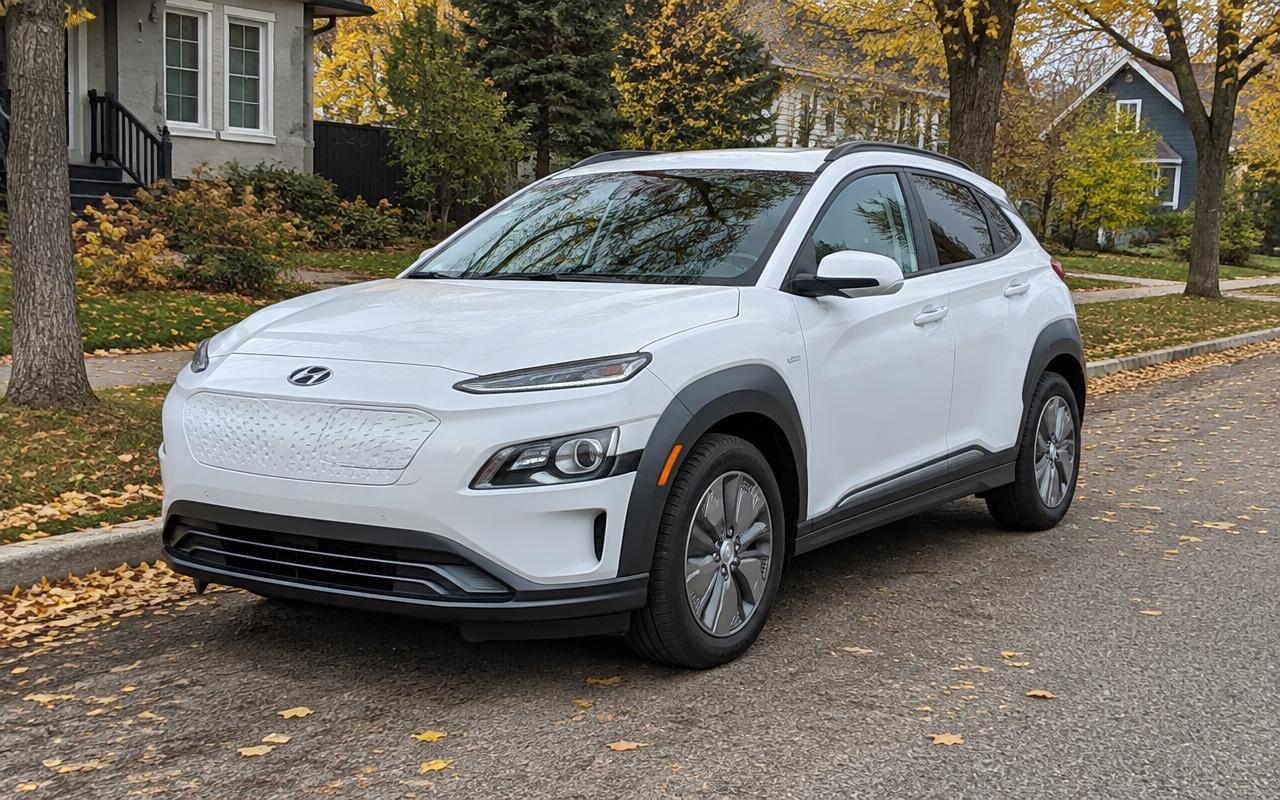
Hyundai Kona Electric (2019–2022)
The Quiet Overachiever
The Kona Electric consistently punches above its weight on the highway.
Why it surprises people:
Excellent efficiency
Liquid-cooled battery
Heat pump on many trims
Predictable charging behaviour
Real-world highway range:
Summer: 380–420 km
Winter: 280–330 km
Limitations:
Slower DC fast-charging speeds
Smaller interior
Best for:
Solo drivers or couples who road-trip but don’t need SUV space
Tesla Model S (2017–2019)
Old Luxury, Still a Highway Beast
Older Model S cars remain excellent long-distance cruisers.
Why they still work:
Very large battery packs
Excellent aerodynamics
Comfortable highway ride
Supercharger access
Real-world highway range:
Summer: 450–520 km
Winter: 320–400 km
Watch for:
Older tech
Out-of-warranty repairs
Higher insurance
Best for:
Buyers who want long-range luxury at used prices
EVs That Look Long-Range on Paper (But Aren’t Highway Champs)
Some EVs perform well in the city but struggle on long trips.
Approach with caution:
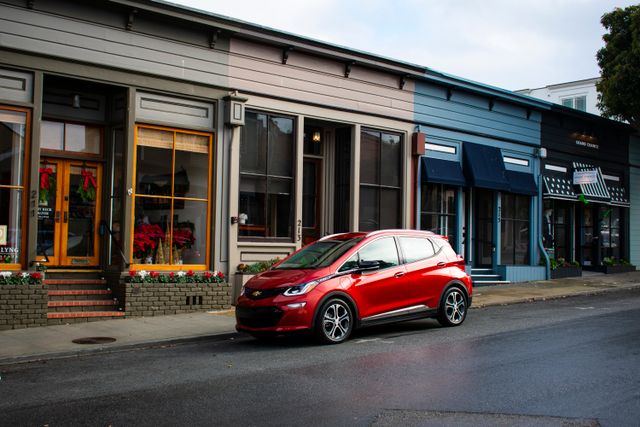
Chevrolet Bolt EV (great efficiency, slow charging)
Nissan LEAF Plus (range OK, thermal limits)
Short-range compliance EVs
These can road-trip — but require patience and planning.
Realistic Highway Range Expectations (Canada)
A simple rule of thumb:
Rated range × 0.7 = realistic winter highway range
Rated range × 0.85 = realistic summer highway range
If that number comfortably exceeds your typical drive plus a buffer, you’re good.
🧠 Final Verdict
If you commute 120 km or more per day, the key is simple:
Buy more range than you think you need.
Aim for:
400+ km rated range
Strong winter efficiency
Remaining battery warranty
For most Canadians, the sweet spot is a 3–5 year old long-range EV — after the steepest depreciation but before major warranty expiry.
With used EV prices currently softening, this is one of the best times in years to lock in a commuter-friendly EV.
🔗 Sources & Further Reading
Natural Resources Canada – EV energy efficiency & ratings
https://natural-resources.canada.ca/energy/efficiency/transportation
Transport Canada – Vehicle usage & commuting data
https://tc.canada.ca/en/road-transportation
Consumer Reports – EV battery degradation research
https://www.consumerreports.org/cars/electric-vehicles/
Statistics Canada – Commuting & transportation statistics
https://www.statcan.gc.ca/en/subjects-start/transport