The Complete Guide to Buying a Used EV in Canada (2026)
The used EV market in Canada has never looked better for buyers — and that's not hype, it's math. Popular models from 2020 to 2023 have lost 35 to 55% of their original value (GoElectric Calgary, 2026), which means a car that cost $45,000 new might now be sitting on AutoTrader for $22,000. The catch? Buying a used EV wrong can cost you thousands in battery repairs, missed rebates, or charging headaches you could have seen coming.
This guide covers everything you need to know before you sign anything: how to check battery health, what to ask a seller, which models hold up in Canadian winters, how to protect yourself legally, and where the best deals are hiding right now.
Why the Used EV Market Is Worth Your Attention Right Now
A wave of off-lease returns and high used inventory has pushed used EV prices into genuinely accessible territory. In 2026, you can find solid used EVs for under $10,000 (older Nissan Leafs), under $15,000 (early Chevrolet Bolts, Kia Soul EVs), and under $20,000 (Hyundai Kona Electric, Volkswagen e-Golf, BMW i3), according to Canada Drives.
That kind of pricing didn't exist three years ago.
The broader picture is also shifting. After a rough 2025 — when the federal iZEV incentive program was cancelled mid-year and new EV sales dropped 25% (Canada Energy Regulator, 2026) — Ottawa relaunched its Electric Vehicle Affordability Program (EVAP) in February 2026, offering $5,000 on new battery electric vehicles. That matters for used buyers indirectly: federal incentives on new cars compress what people will pay for used ones, which keeps used prices competitive.
The one thing that hasn't changed: buying a used EV requires a different checklist than buying a used gas car. There's no transmission to worry about, no engine oil to check — but the battery is everything, and that's where most buyers go wrong.
Battery Health: The Only Number That Really Matters
The high-voltage battery pack represents 30 to 50% of a used EV's total value (Recharged, 2026). A weak pack means reduced range, slower charging, and potentially a replacement cost of $8,000 to $20,000 depending on the model. Mileage on the odometer tells you almost nothing about battery condition — what matters is State of Health (SoH), which measures remaining capacity as a percentage of the original factory spec.
Here's how to get that number:
OBD-II diagnostic apps — For most EVs, a Bluetooth OBD-II adapter and an app like Leaf Spy (Nissan Leaf), or a generic EV diagnostic tool, will pull a real SoH percentage. Many EV specialists offer this service for $50–$100.
On-screen battery report — The Nissan Leaf displays battery capacity bars directly in the instrument cluster, making it one of the easier models to evaluate at a glance.
Dealer-provided health report — Reputable EV dealers should have a written battery health report on file. If they can't produce one, that's a red flag.
The benchmark to use: 80% SoH or above is generally considered acceptable for a vehicle under six years old. Below 80%, negotiate the price down by $2,000 to $5,000 to account for eventual degradation or replacement (Ridez, 2026).
One important caveat: early Nissan Leafs (2011–2017) with passive air cooling are the outliers in an otherwise reassuring data story. Most modern EVs with liquid-cooled thermal management retain 80% or more capacity well past 160,000 km. The Leaf's passive system is more vulnerable to heat, which matters especially in western and southern Canada.
What the Physical Inspection Should Cover
Inspecting a used EV is different from a standard pre-purchase inspection, but that doesn't mean it's simpler. An EV-experienced mechanic will check different things than a general shop. Spending $150–$200 on a proper pre-purchase inspection from an EV-familiar technician is one of the best investments you can make.
Beyond the battery, here's what to examine:
Charging port condition — Inspect both the port and port door. In salt-heavy provinces like Ontario, Quebec, and the Maritimes, corrosion around the inlet is common on older models. Bring a charging cable to test the door mechanism in person.
Charging speed — If possible, plug the car into a Level 2 charger or DC fast charger and confirm it accepts charge at the expected rate. A car that charges at half its rated speed has a real problem.
Brake condition — EVs use regenerative braking heavily, so physical brake wear is usually low. However, rotors and pads can corrode from underuse, particularly on vehicles that sat unused for extended periods.
Tire condition — EVs are heavier than equivalent gas cars, which accelerates tire wear. Uneven wear may indicate suspension or alignment issues worth investigating.
Software and recall status — Check Transport Canada's recall database to ensure all outstanding recalls have been addressed. Software recalls on EVs are common and occasionally significant.
Private Sale vs. Dealer: Which Is Right for You?
Both routes can work well — the right choice depends on your comfort level doing due diligence.
Buying from a dealer gives you some built-in protection. Licensed dealers in Canada are regulated under provincial consumer protection laws and are typically required to disclose known defects. Many offer certified pre-owned programmes with limited warranties, and financing is usually available on-site. The trade-off is a higher sticker price and less flexibility to negotiate.
Private sales often offer better prices and sometimes more transparency — a one-owner seller who charged slowly, kept detailed records, and can walk you through the car's history is often more valuable than a dealership with a vague "passed our inspection" stamp. The downside: there's no warranty, no consumer protection backstop, and you're entirely responsible for due diligence.
Whichever route you take, two checks are non-negotiable before any money changes hands:
CARFAX Canada report — Run a full vehicle history report. CARFAX Canada's 2025 data showed that 1 in 4 used vehicles has accident or damage history, and 40% of lien checks revealed outstanding debt on the vehicle. A lien means a lender may have a legal claim to the car even after you buy it.
Provincial lien check — In Quebec, this is done through the RDPRM (Register of Personal and Movable Real Rights). Other provinces have equivalent registries. Don't skip this step on a private sale.
Which Models Are Worth Buying Right Now
Not all used EVs are created equal. Range, charging speed, thermal management, and parts availability vary significantly by model and year. Here's a practical breakdown of what's on the market in 2026.
Chevrolet Bolt EV / EUV (2019–2023)
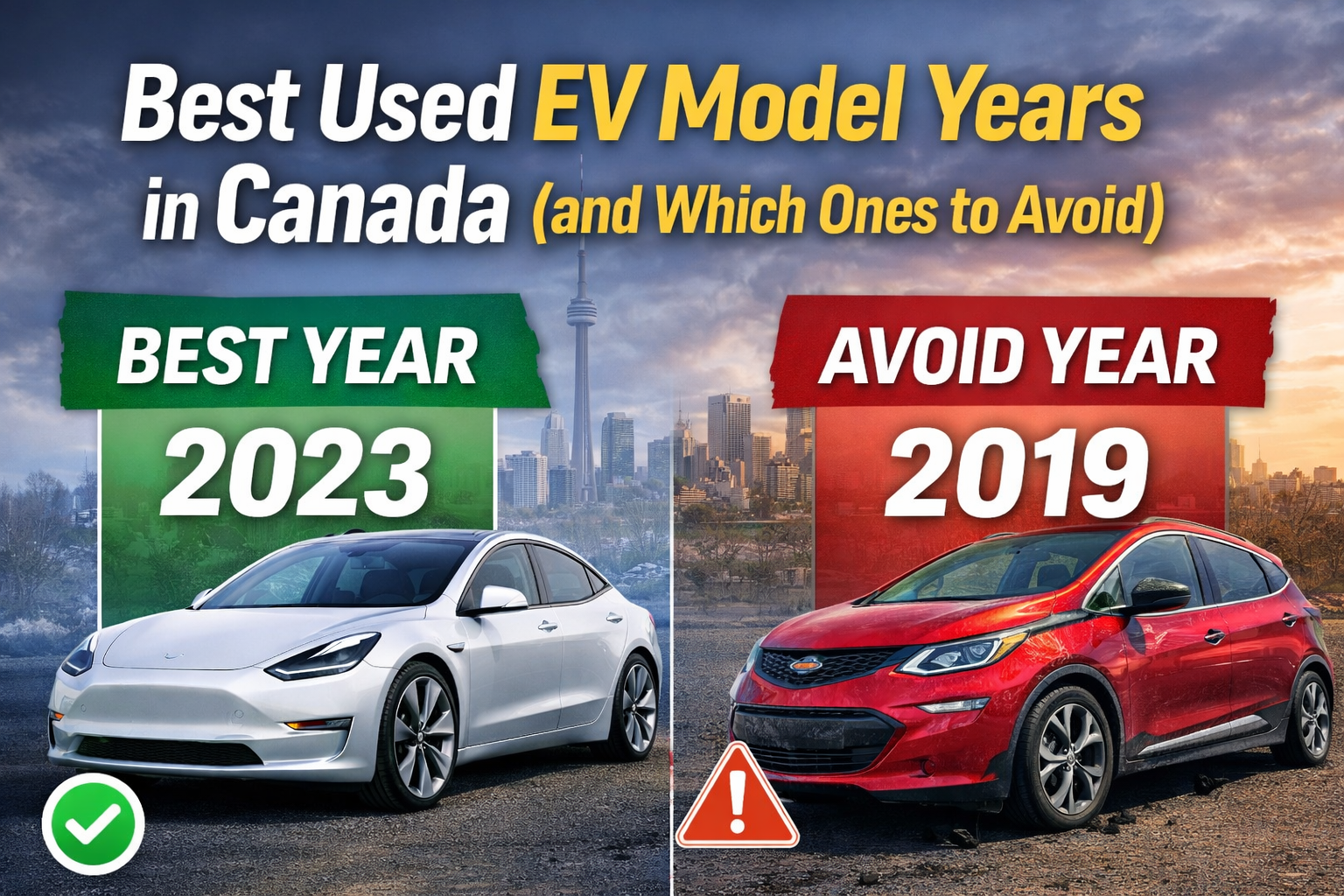
The Bolt is the poster child for steep depreciation, which is excellent news for buyers. The 2022–2023 Bolt EV offers approximately 417 km of rated range and has one of the lowest per-kilometre operating costs of any used EV. It charges slowly on DC fast charge (max 55 kW) compared to newer models — a genuine limitation for road trips — but for daily commuting and Level 2 home charging, it's hard to beat. Expect to pay $15,000–$22,000 CAD depending on year and condition.
Watch out for: the original 2017–2019 Bolt had a battery recall related to fire risk. Confirm all recall work was completed before purchase.
Nissan Leaf (2018–2022, 40 kWh or 62 kWh)
The Leaf remains the most affordable used EV entry point in Canada, and the 40 kWh and 62 kWh variants are meaningfully better than early models. The 62 kWh version (called Leaf Plus or e+) offers around 363 km of range. One significant limitation: CHAdeMO fast charging is now a dying standard in Canada, with fewer public chargers available — check your local charging network before committing.
Watch out for: pre-2018 Leafs with passive battery cooling. These can show significant degradation and are best avoided unless the price reflects the risk.
Hyundai Kona Electric (2019–2022)
The Kona Electric is arguably the best all-rounder in the used market right now. It offers approximately 415 km of rated range, has a well-regarded liquid-cooled battery that holds up well over time, and handles Canadian winters better than many competitors. Used examples in good condition run $20,000–$28,000 CAD.
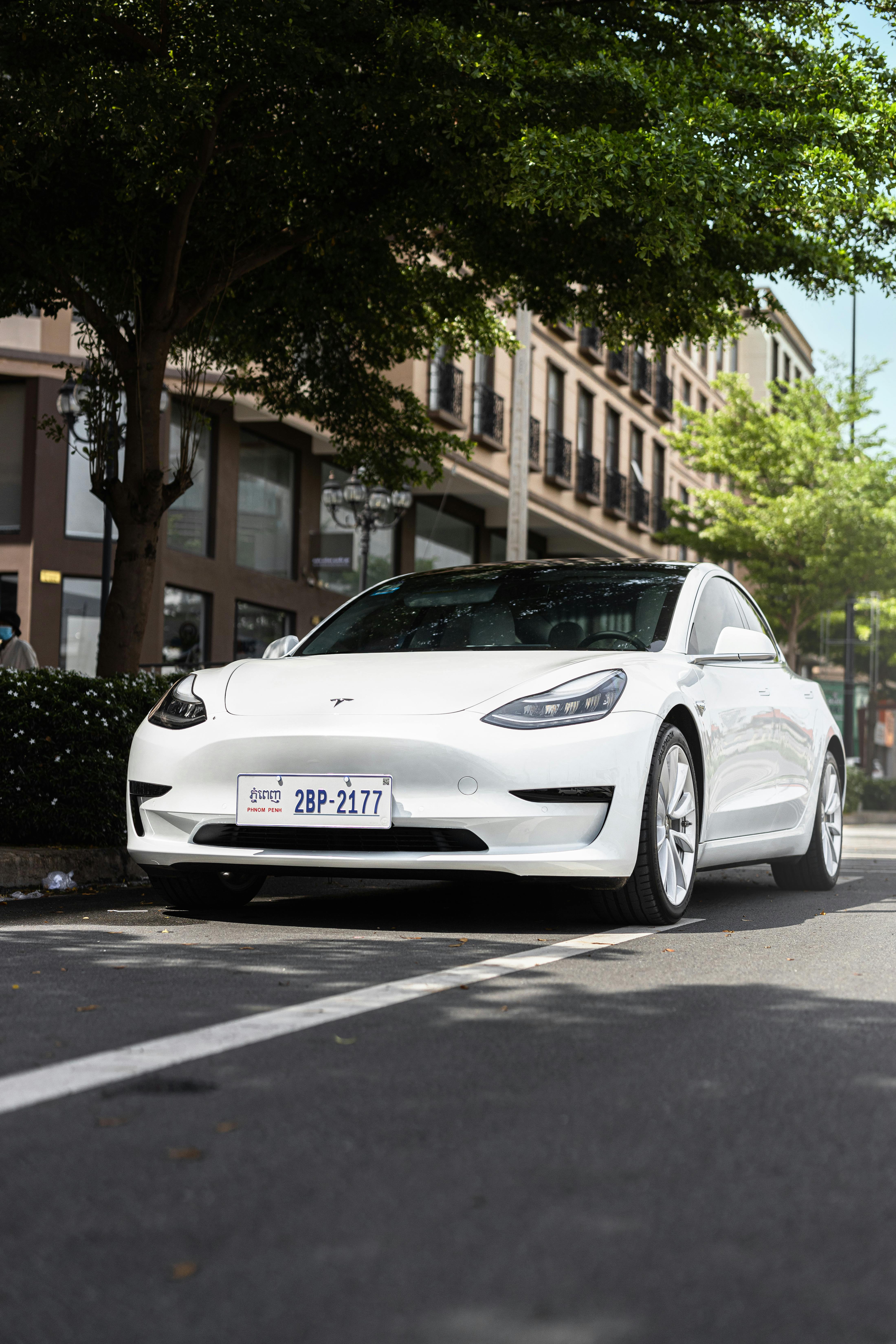
Tesla Model 3 (2018–2020)
Early Model 3s offer 350–430 km of range depending on the variant and still have access to Tesla's Supercharger network — one of the most reliable fast-charging networks in Canada. Condition matters enormously with these; buy the cleanest example you can find. Budget $25,000–$35,000 for a solid early Model 3.
Kia Soul EV / Kia Niro EV
Both are underrated options in the used market. The Soul EV's boxy shape makes it surprisingly practical, and the Niro EV offers crossover utility without crossover pricing. Both use the same Hyundai-Kia battery platform as the Kona, which is reassuring from a longevity standpoint.
Rebates, Incentives, and What's Actually Available in 2026
The federal EVAP rebate applies only to new vehicles, not used ones. For used buyers, the picture is limited but worth checking:
Quebec still offers up to $1,000 on eligible used EVs as of 2026.
Prince Edward Island has programmes covering used battery electric vehicles.
Most other provinces currently offer nothing for used EV purchases.
Don't assume a rebate applies without checking your province's current programme — these change regularly. Natural Resources Canada maintains an up-to-date incentive database at nrcan.gc.ca.
The indirect benefit of federal incentives on new cars is worth understanding: when new EV prices fall due to rebates, used prices follow. The EVAP relaunch in early 2026 and the surge in new EV sales — ZEV sales more than doubled from approximately 8,600 in January to over 21,500 in March 2026, according to Statistics Canada — will eventually push more off-lease inventory into the used market, which should keep used prices competitive through 2027.
Winter Range: Setting Realistic Expectations
Every EV loses range in cold weather. This is physics, not a defect. The battery chemistry slows in low temperatures, and running the cabin heater draws significantly from the pack. As a practical benchmark, plan for 20 to 30% less range when temperatures drop below -10°C.
What makes a meaningful difference is whether the EV has a heat pump instead of resistive electric heating. Heat pumps are roughly three times more efficient at extracting cabin heat, which preserves more of the battery for driving. Models with heat pumps as standard or optional equipment include the Tesla Model Y, Volkswagen ID.4, Kia Niro EV, and the Hyundai Ioniq 5. The Chevy Bolt uses resistive heating only — a real consideration if you're in Winnipeg or northern Ontario.
Bottom Line
The used EV market in 2026 is the best it's ever been for Canadian buyers — low prices, mature technology, and a growing selection of genuinely practical vehicles. The Chevy Bolt and Hyundai Kona Electric represent the best value for most people. Battery State of Health is the single most important thing to verify before any purchase — always get a diagnostic report, not just a visual inspection. Run a CARFAX Canada report and a lien check on every vehicle, whether you're buying privately or from a dealer, and budget for a pre-purchase inspection from an EV-familiar mechanic. Do those things and you're unlikely to get burned.
Sources & Further Reading
Canada Drives — Used EV pricing benchmarks by model and budget, market overview for 2026 — canadadrives.ca
Canada Energy Regulator (CER) — Canadian EV sales data 2024–2025, EVAP programme details — cer-rec.gc.ca
Recharged — Battery health benchmarks, SoH thresholds, depreciation data by model — recharged.com
GoElectric Calgary — Used EV depreciation data (35–55% on 2022–2023 models) — goelectricyyc.com
CARFAX Canada — 2025 Year in Rear View: lien and accident prevalence in the Canadian used vehicle market — businesswire.com
Ridez.ca — OBD-II inspection standards, SoH thresholds, battery negotiation benchmarks for Canada — ridez.ca
CAA-Quebec — Used EV buying guidance including lien checks (RDPRM), CARFAX, and dealer licensing — caaquebec.com
The Canadian Vanguard / Statistics Canada — ZEV sales rebound data (January–March 2026) — thecanadianvanguard.com