Public EV Charging Networks in Canada Compared (2026)
ChargePoint vs Petro-Canada vs Electrify Canada vs Tesla Supercharger — Which Are Most Reliable and Affordable?
If you own (or are considering) a used electric vehicle in Canada, public charging matters — even if you charge at home most of the time.
Road trips, apartment living, winter driving, and unexpected detours all put Canada’s charging networks to the test. And while EV charging has improved dramatically over the past few years, not all networks are equal when it comes to reliability, pricing, and ease of use.
This guide compares the four major public charging networks Canadians actually use, with a focus on real-world ownership — not marketing promises.


The Big Picture: Canada’s Charging Landscape
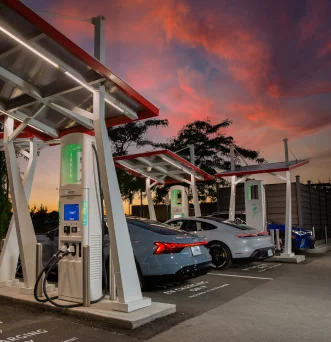
Canada’s public charging ecosystem is a mix of:
National networks
Regional providers
Private operators
Automaker-backed infrastructure
For used EV buyers, the most important questions are simple:
Will the charger work when I arrive?
How fast will it charge in real conditions?
How much will it actually cost me?
Let’s break down the major players.
When Charging always consider Battery Degradation in relation to charging speeds.
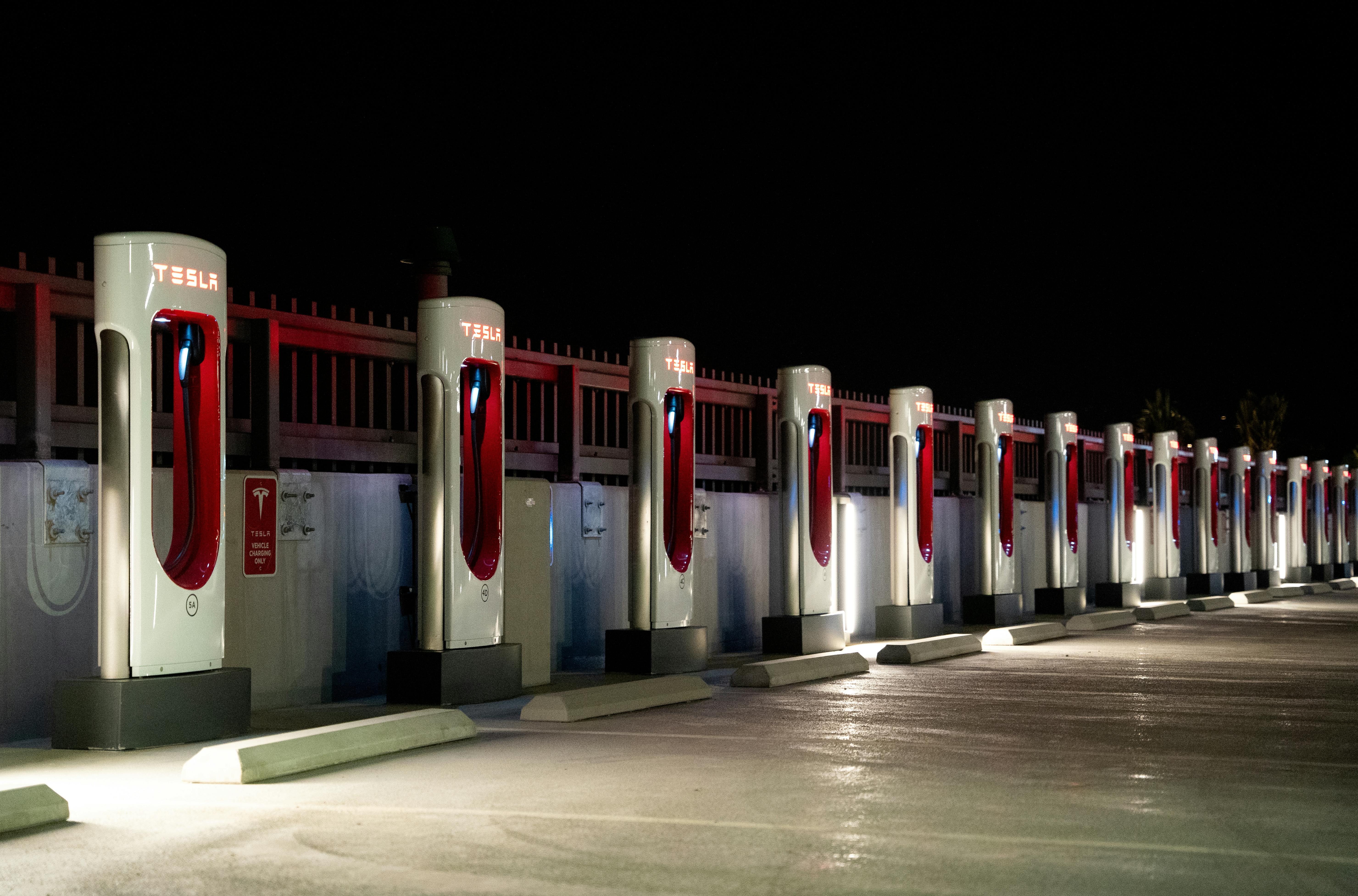
Tesla Supercharger Network
Best Overall for Reliability & Ease of Use
Tesla’s Supercharger network remains the gold standard in Canada — even in 2025.
Strengths
Industry-leading uptime and reliability
Plug-and-charge simplicity (no apps or cards needed)
Excellent highway corridor coverage
Consistent charging speeds
Strong winter performance
Pricing
Typically mid-range
Transparent, per-kWh pricing
No membership required
Who it’s best for
Tesla owners who road-trip regularly
Drivers who value reliability over absolute lowest cost
Winter highway travel
Reality check:
Tesla’s network is still the most “gas-station-like” EV charging experience in Canada.
Electrify Canada
Best High-Power Charging for Non-Tesla EVs
Electrify Canada is effectively the fast-charging backbone for CCS-equipped EVs.
Strengths
Very high charging speeds (up to 350 kW)
Good highway placement
Improving reliability year over year
Designed for long-distance travel
Weaknesses
Occasional charger outages
App and payment issues still happen
Speeds depend heavily on vehicle and battery temperature
Pricing
Higher than average without membership
Membership plans can reduce per-kWh costs
Who it’s best for
CCS EV owners (Hyundai, VW, Ford, GM)
Long-distance drivers
EVs capable of high charging speeds
Reality check:
When Electrify Canada works well, it’s excellent. When it doesn’t, it can be frustrating.
Petro-Canada EV Charging
Best Traditional Roadside Coverage
Petro-Canada took a familiar approach: put fast chargers where gas stations already exist.
Strengths
Easy-to-find locations
Good highway spacing
Simple credit-card payment
Familiar amenities (washrooms, food)
Weaknesses
Fewer stalls per site
Reliability varies by location
Not always the fastest chargers in practice
Pricing
Competitive but not cheap
Flat-rate pricing can favour some vehicles over others
Who it’s best for
Drivers who prefer simple, familiar locations
Occasional fast charging
Highway travel with backup options nearby
Reality check:
Petro-Canada chargers are convenient — but not always dependable as a sole charging plan.
ChargePoint
Best for Urban & Workplace Charging
ChargePoint isn’t really a “network” in the traditional sense — it’s a platform used by thousands of independent hosts.
Strengths
Massive number of locations
Excellent app and station info
Common in cities, condos, and workplaces
Very reliable Level 2 charging
Weaknesses
DC fast charging is inconsistent
Pricing varies wildly by host
Not designed for road trips
Pricing
Set by site owners
Often inexpensive for Level 2
Can be surprisingly expensive at some locations
Who it’s best for
Apartment dwellers
City drivers
Daily top-ups rather than full charges
Reality check:
ChargePoint is fantastic for daily life — but not your road-trip hero.
Reliability Comparison (Real-World Experience)
Tesla Supercharger
Network Reliability: ⭐⭐⭐⭐⭐
Ease of Use: ⭐⭐⭐⭐⭐
Best Use Case: Road trips, winter driving
Electrify Canada
Network Reliability: ⭐⭐⭐⭐☆
Ease of Use: ⭐⭐⭐⭐☆
Best Use Case: Long-distance CCS charging
Petro-Canada EV
Network Reliability: ⭐⭐⭐⭐☆
Ease of Use: ⭐⭐⭐⭐☆
Best Use Case: Highway convenience
ChargePoint (Level 2)
Network Reliability: ⭐⭐⭐⭐☆
Ease of Use: ⭐⭐⭐⭐☆
Best Use Case: Urban and workplace charging
Which Network Is the Most Affordable?
There’s no single cheapest network — cost depends on how and where you charge.
For more Affordable Ev's- Best Under 25,000$
General trends:
Home charging is always cheapest
ChargePoint Level 2 is often very affordable
Electrify Canada can be expensive without membership
Tesla Superchargers are competitively priced for the reliability you get
Used EV buyers should focus less on “cheapest charger” and more on predictable access.
What This Means for Used EV Buyers
When choosing a used EV, charging access matters almost as much as range.
Ask yourself:
Do I road trip often?
Do I have home charging?
Am I relying on public chargers weekly or monthly?
Tesla buyers benefit from a built-in network advantage.
Non-Tesla buyers should prioritize CCS compatibility and route planning.
Final Verdict: Reliability Beats Price Every Time
In Canada, the best charging network is the one that:
Works in winter
Works at night
Works when you’re tired and just want to get home
For now:
Tesla Superchargers lead on reliability
Electrify Canada leads on raw power
ChargePoint dominates daily urban charging
Petro-Canada offers familiar highway coverage — with caveats
Public charging is improving fast — but informed planning still makes all the difference.