Used Electric SUVs Compared: Tesla Model Y vs Ford Mustang Mach-E
Which One Makes More Sense for Canadian Buyers?
If you’re shopping for a used electric SUV in Canada, chances are you’ve narrowed things down to two heavy hitters:
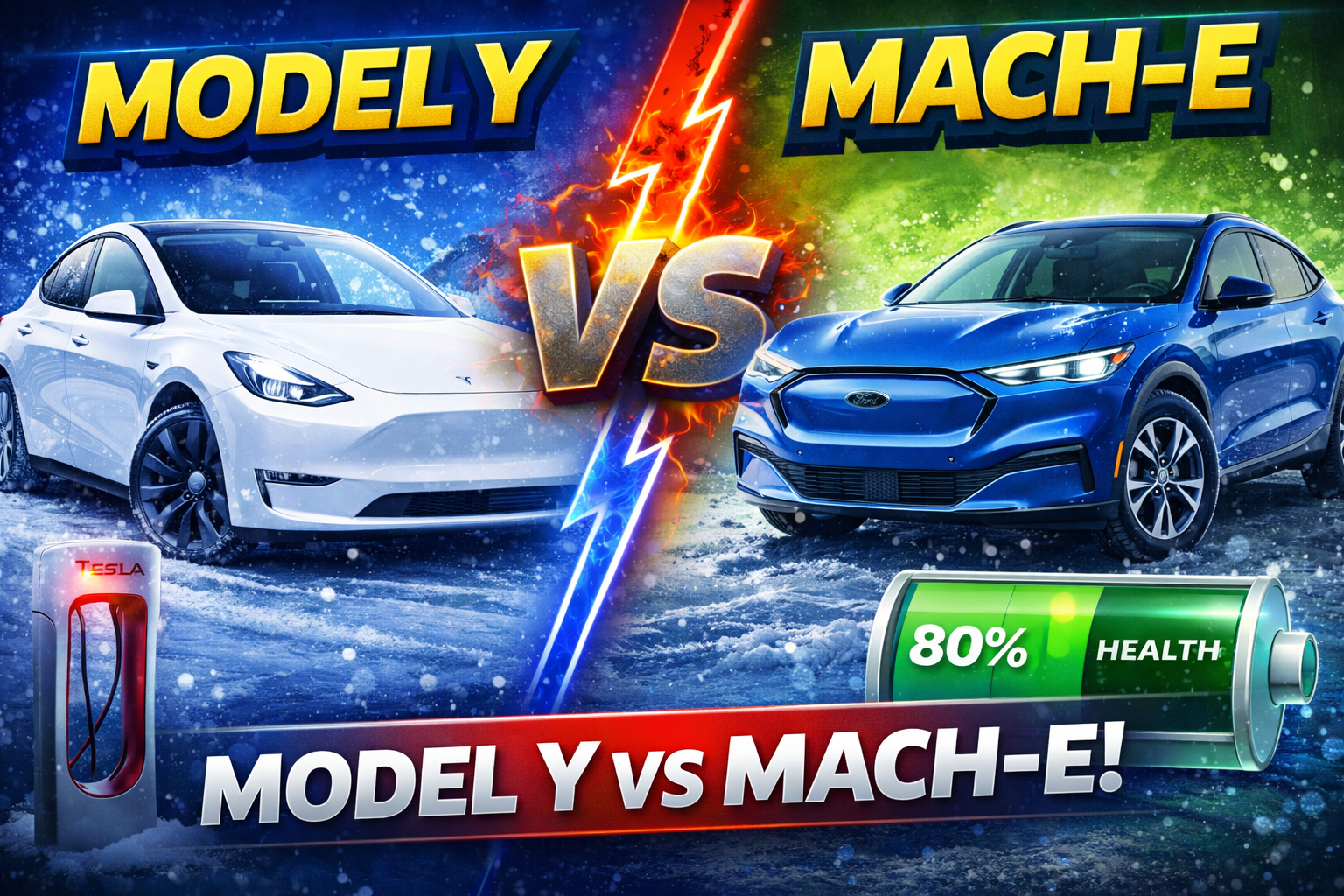
The Tesla Model Y
and the Ford Mustang Mach-E
They’re similar in size, price, and capability — but they deliver very different ownership experiences, especially once winter, road trips, charging, and long-term costs enter the picture.
This comparison looks past hype and focuses on what really matters for used EV SUV buyers:
Real-world range
Winter performance
Charging access
Reliability & ownership costs
Overall long-term value
Quick Snapshot: Two Very Different EV Philosophies
Before the numbers, it helps to understand the mindset behind each vehicle.
Tesla Model Y:
Efficiency-first, software-driven, built around Tesla’s charging ecosystem.
Ford Mustang Mach-E:
Comfort-oriented, traditional SUV feel, strong winter traction options.
Both are excellent — but they appeal to different types of owners.
Range & Efficiency (What Canadians Actually Get)
Tesla Model Y (2021–2023 used)
Rated range: ~488–531 km (trim-dependent)
Winter range loss: ~15–25%
Heat pump standard
Extremely efficient drivetrain
Tesla’s efficiency advantage shows up most on:
Highway driving
Winter trips
Long-distance travel
Ford Mustang Mach-E (2021–2023 used)
Rated range: ~470–505 km (trim-dependent)
Winter range loss: ~20–30%
Heat pump standard on later trims
Heavier and less aerodynamic
The Mach-E sacrifices some efficiency for:
Ride comfort
Interior insulation
AWD stability
Range verdict:
➡️ Model Y wins on efficiency and winter consistency
Charging: The Biggest Ownership Difference
Tesla Model Y
Full access to the Tesla Supercharger network
Extremely high reliability
Simple plug-and-charge experience
Excellent winter uptime
For many Canadians, this alone is a deciding factor — especially if you:
Road trip often
Live in colder regions
Don’t want to troubleshoot chargers in winter
Tesla’s network consistency is still unmatched in Canada.
(Public Charging Networks in Canada Compared)
Ford Mustang Mach-E
Uses CCS fast charging
Relies on Electrify Canada, Petro-Canada, and others
Charging speeds are competitive
Reliability depends heavily on location
Mach-E charging works well — but requires more planning and patience.
Charging verdict:
➡️ Model Y wins decisively
For current CCS network coverage and expansion plans, Electrify Canada publishes up-to-date station data.
(External source: Electrify Canada – Charging Network)
https://www.electrify-canada.ca
Winter Driving & AWD Performance
Tesla Model Y
AWD versions are excellent in snow
Very good traction control
Lower ground clearance than Mach-E
Winter efficiency is a standout
Ford Mustang Mach-E
AWD versions feel more “SUV-like”
Better ground clearance
Softer suspension for rough winter roads
Very confidence-inspiring in deep snow
Winter verdict:
➡️ Mach-E feels more rugged
➡️ Model Y feels more efficient
Interior, Comfort & Practicality
Tesla Model Y
Minimalist interior
Massive cargo space
Excellent rear seat legroom
Central touchscreen controls everything
Some love the simplicity — others miss physical buttons.
Ford Mustang Mach-E
More traditional interior layout
Physical controls plus touchscreen
Better seat comfort for long drives
Quieter cabin at highway speeds
Mach-E feels more familiar coming from a gas SUV.
Interior verdict:
➡️ Mach-E wins on comfort and familiarity
➡️ Model Y wins on cargo and space
Reliability & Long-Term Ownership
Tesla Model Y
Simple drivetrain
Strong battery durability
Software updates add features over time
Repairs can be expensive out of warranty
Service quality varies by region.
Ford Mustang Mach-E
Solid mechanical reliability
Early software issues mostly resolved
Easier access to Ford dealers
Traditional service experience
Reliability verdict:
➡️ Both are good
➡️ Mach-E has a more predictable service network
Used Pricing & Value (Canada, 2025)
Typical used pricing:
Model Y: $45,000–$55,000
Mach-E: $42,000–$52,000
What you’re paying for:
Tesla = charging ecosystem + efficiency
Ford = comfort + traditional SUV feel
Which One Should You Buy?
Choose the Tesla Model Y if:
You road trip regularly
Public charging matters to you
You want the lowest operating friction
Efficiency and tech matter most
You like minimalist design
Choose the Ford Mustang Mach-E if:
You want a more traditional SUV feel
Winter traction and comfort matter most
You prefer physical controls
Dealer support is important to you
You don’t rely heavily on fast charging
Final Verdict: Two Excellent Used EV SUVs — Different Priorities
The Model Y is the efficiency and charging king.
The Mach-E is the comfort-first, winter-confident SUV.
Neither is a bad choice — but they reward different driving lifestyles.
If charging reliability and efficiency top your list, Tesla wins.
If comfort, familiarity, and winter confidence matter more, Ford delivers.