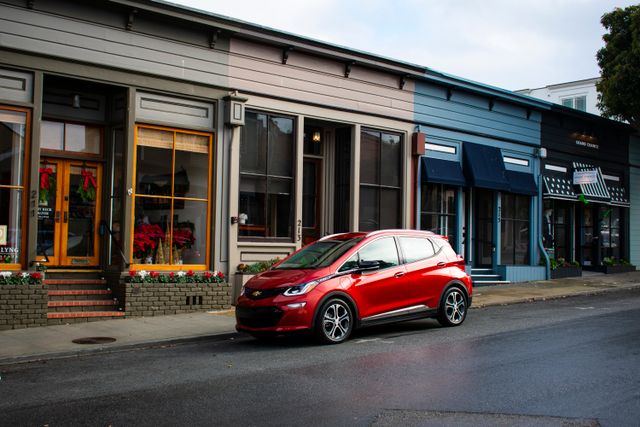

Our guide to where to buy a used electric car covers private sale vs. dealer vs. online broadly. This piece zeroes in on two specific used-EV sources that get talked about together constantly but actually carry meaningfully different risk profiles: a car that came back from a personal lease, and a car that came out of a rental or fleet company's inventory.
Quick answer: Off-lease and former-rental EVs are not the same thing, despite often being discussed interchangeably. An off-lease EV typically had one owner-driver, a documented maintenance schedule tied to lease terms, and moderate mileage accumulated by someone with a financial incentive to avoid excess wear charges — generally the safer of the two categories. A former-rental or fleet EV had multiple drivers, often higher and more consistently accumulated mileage, and more frequent (if sometimes rougher) service intervals — a different but not necessarily worse risk profile, provided the service history is genuinely available. On the specific "Hertz fire sale" story that circulated widely — Teslas under $20,000 USD, Bolt EVs under $14,000 USD — that sell-off was explicitly documented as a US-fleet story; Electric Autonomy Canada found no clear confirmation of a comparable Canadian inventory dump, and Uber Canada confirmed its Canadian rideshare EV rental availability was unaffected. Don't assume that specific deal exists here — but the general category of ex-rental and ex-fleet EVs turning up on the Canadian used market is real and worth understanding on its own terms.
Two categories, two different risk profiles
It's worth separating these clearly before shopping either one, because the due-diligence priorities are genuinely different.
Off-lease EVs come from personal leases — an individual driver leased the car for a fixed term (commonly 24-48 months), typically with a mileage allowance they had a real financial incentive to stay within, since exceeding it triggers per-kilometre penalty charges at lease-end. That incentive structure tends to produce cars with moderate, honestly-tracked mileage and reasonably consistent maintenance, since the dealer inspects the vehicle at lease return and the previous driver generally wanted to avoid excess-wear charges. A single owner-driver also means a more consistent driving and charging pattern — genuinely useful information if you can get any of it, since aggressive, frequent DC fast charging is one of the few real levers that can accelerate battery degradation beyond what age and mileage alone would predict.
Former-rental or fleet EVs are a different animal. Multiple drivers means multiple driving styles, multiple charging habits, and generally rougher day-to-day treatment — interior wear, minor cosmetic damage, and inconsistent charging behaviour (a renter unfamiliar with the car is more likely to rely on DC fast charging out of convenience rather than planning around overnight Level 2 charging) are all more common. The upside is that rental and fleet operators typically run vehicles through more frequent, scheduled maintenance than an average private owner, and larger operators often maintain genuinely thorough service records — when you can actually get access to them.
What we can and can't say about the Hertz story specifically
The widely covered Hertz EV fire sale — Teslas sold for as little as $21,000 (later reports cited under $20,000) and Chevrolet Bolt EVs under $14,000, both in US dollars, as Hertz offloaded roughly a third of its US EV fleet — is real, but it's explicitly a US-market story, and it's worth being honest about what that does and doesn't tell you as a Canadian shopper. Reporting on the Canadian angle specifically found little clarity: Electric Autonomy Canada's coverage at the time noted the sell-off "applies solely to its U.S. fleet," and while Hertz does offer EVs from Tesla and Polestar at select Canadian locations, no confirmation exists that a comparable inventory dump happened — or is happening — here. Separately, Uber Canada confirmed the US sale wouldn't affect electric vehicle rental availability for Canadian rideshare drivers, which at least tells us Hertz's Canadian rental operations weren't being wound down wholesale.
The practical takeaway: don't go shopping for a Canadian "Hertz fire sale" expecting US pricing to show up here — it hasn't been documented, and currency conversion alone means a US-dollar deal doesn't translate directly to Canadian pricing even if inventory did cross the border. What's genuinely useful from the Hertz story is the underlying pattern it illustrates: large rental and fleet operators periodically turn over EV inventory in bulk, and when they do, those vehicles eventually reach used marketplaces — a pattern worth watching for regardless of which specific company or country it originates from.
How to actually shop each category
For an off-lease EV, the most useful question to ask is simply how much documentation survived the lease-return process — a dealer that handled the original lease and is now reselling the returned vehicle often has more complete records than a car that's changed hands once or twice since. Ask specifically about the original lease mileage allowance and whether the car came in under or over it; a car that consistently ran well under its allowance is a mild positive signal about how gently it was likely driven.
For a former-rental or fleet EV, the documentation question matters even more, because the range of possible outcomes is wider. Ask specifically for maintenance records from the rental or fleet operator directly, not just a generic vehicle history report — a legitimate former-fleet vehicle sold through a proper channel (a dealer auction, or the rental company's own used-vehicle arm) should be able to produce this. If a seller can't or won't provide any service history for a car they're describing as a former rental or fleet vehicle, treat that as a real gap to account for in your offer, not a minor omission. Physically inspect the interior more carefully than you would on a typical used car purchase — multiple-driver wear shows up in seat bolsters, pedal covers, and touchscreen surfaces well before it shows up in the mechanical condition, and it's a reasonable proxy for how hard the car was actually used day to day.
The bottom line
Off-lease and former-rental EVs aren't the same purchase, even though they get talked about as one category — an off-lease car generally carries a gentler, better-documented single-driver history, while a former-rental or fleet vehicle trades a rougher, multi-driver wear pattern for potentially more thorough (if harder to access) scheduled maintenance. Don't chase a specific US fire-sale story that hasn't been shown to apply here, but do take the underlying category seriously: ask pointed questions about which one you're actually looking at, and shop each on its own real merits rather than assuming either label automatically means a good deal.
FAQ
What's the difference between an off-lease EV and a former rental EV? An off-lease EV typically had one driver under a personal lease with a mileage allowance and lease-end inspection incentive to keep it well maintained. A former-rental or fleet EV had multiple drivers and generally rougher day-to-day wear, offset by potentially more frequent scheduled maintenance.
Is the Hertz EV fire sale available in Canada? Not confirmed — that specific sell-off (Teslas under $20,000 USD, Bolt EVs under $14,000 USD) was documented as a US-fleet story, and Canadian-specific reporting found no clear evidence of a comparable inventory dump here.
Are former-rental EVs worth buying? They can be, provided you can get genuine maintenance documentation from the rental or fleet operator — treat a seller's inability to produce service records as a real gap to negotiate around, not a minor detail.
Should I ask a dealer whether a used EV was previously leased or a fleet/rental vehicle? Yes — always ask directly, and ask specifically for whatever documentation exists (lease-return inspection report, fleet maintenance records) rather than relying on a general vehicle history report alone.
Sources: Electric Autonomy Canada, "Hertz rattles rental market with move to sell a third of its EV fleet"; Digital Trends, "Hertz is selling used Teslas for under $20K, Chevrolet Bolt EVs under $14K". The Hertz sell-off specifically is documented as a US-market event — no comparable Canadian-specific pricing or inventory data was confirmed during research.