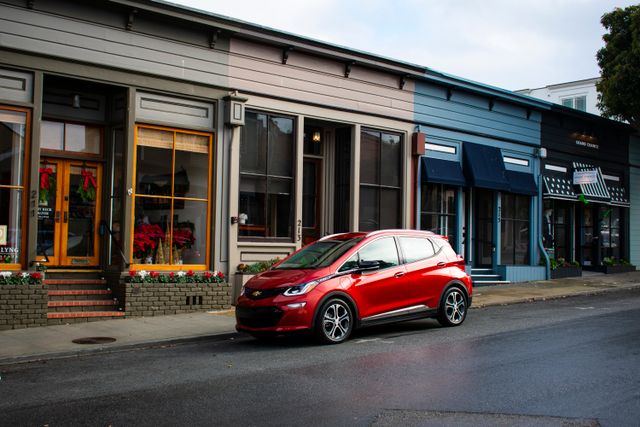

Our province-by-province used EV buying guide covers buying domestically. Importing from the US used to be a genuinely attractive way to access cheaper American used-EV pricing — and older guides on this topic, including some circulating right now, still frame it that way. That framing is now meaningfully out of date, because a real, significant cost was added to the equation in 2025 that changes the math for anyone importing a vehicle as an individual, not just automakers.
Quick answer: Since April 2025, Canada has applied a retaliatory surtax of up to 25% on US-origin motor vehicles, and — this is the part that catches people off guard — it applies to individual, personal-use vehicle importers, not just commercial ones; the remission orders that shield automakers and large commercial importers from the surtax explicitly do not extend to a private buyer importing a single vehicle. On top of that surtax, you're still looking at the standard RIV registration fee ($325 + GST/HST), a $100 air conditioning excise tax, GST (5% of vehicle value), and import duty — 0% if the vehicle qualifies under CUSMA/USMCA rules of origin, 6.1% otherwise. EVs are generally exempt from the separate green levy, since that tax targets fuel-inefficient vehicles specifically. Combined, a used EV that looked like a 15-17% premium over sticker price to import before April 2025 can now run 25-35%+ once the surtax is factored in — a large enough shift that importing, for most buyers, is no longer the bargain it used to be.
The process itself, briefly
The basic mechanics of importing a vehicle from the US haven't changed: the vehicle needs to be on the Registrar of Imported Vehicles (RIV) compatibility list, it needs to be free of open recalls, and it needs to pass an RIV inspection — within 45 days of importation for most vehicles, though salvage-titled vehicles get a longer one-year window. You complete a Vehicle Import Form (Form-1) at the border (RIV offers an online version, but it must be printed and physically presented to the customs officer — it can't be filed purely electronically), pay the applicable duties and taxes at that point, and then complete the RIV inspection and provincial registration afterward. A realistic timeline, once you account for the inspection and provincial paperwork, runs 1-4 weeks.
One important restriction worth knowing upfront: a vehicle modified from its original factory state generally does not qualify for import — this applies even to some Canadian-owned vehicles that were modified while registered in the US. For a used EV, this is less likely to be an issue than for, say, a lifted truck, but it's worth confirming the specific vehicle hasn't had non-factory modifications before you commit to a purchase.
The costs that haven't changed
Several fees apply regardless of the surtax situation. The RIV program fee is $325 plus applicable GST/HST for vehicles under 15 years old. A federal air conditioning excise tax of $100 applies to any imported vehicle equipped with air conditioning — which is to say, virtually every EV on the market. GST applies at 5% of the vehicle's value for duty. Import duty depends on the vehicle's origin: 0% if it qualifies under CUSMA (the USMCA successor agreement) rules of origin — true for most vehicles actually assembled in the US, Canada, or Mexico — or 6.1% under Most Favoured Nation rates if it doesn't qualify. One piece of genuinely good news for EV importers specifically: the separate federal green levy, which applies to fuel-inefficient vehicles, generally doesn't apply to EVs at all, since the tax is structured around poor fuel economy that a zero-emission vehicle simply doesn't have.
The cost that changed everything: the 25% surtax
Here's the update that matters most, and the one most likely to be missing from older importing guides: as of April 2025, Canada implemented a retaliatory surtax of up to 25% on many new and used US-origin passenger vehicles and light trucks, part of the broader Canada-US trade dispute — and this surtax has been renewed for 2026-2027 rather than expiring. The critical detail for anyone considering an individual import: remission orders exist that shield vehicle manufacturers and large commercial importers from this surtax, but those remission orders explicitly do not apply to a private individual importing a single personal-use vehicle. If you're importing one used EV for yourself, you are not covered by the exemptions that apply to automakers — you pay the surtax.
How the surtax is actually calculated depends on whether the vehicle qualifies under CUSMA. For a CUSMA-qualifying vehicle, the surtax applies only to the portion of the vehicle's value that isn't Canadian or Mexican content — and unless you can document the vehicle's actual regional value content (genuinely difficult for an individual buyer of a used car), the default assumption used is that only 15% of the vehicle's value is Canadian/Mexican content, meaning the 25% surtax effectively applies to 85% of the vehicle's value. For a non-CUSMA-qualifying vehicle, the surtax applies to the vehicle's full value for duty, on top of the 6.1% MFN duty rate.
What this looks like with real numbers
Take a used EV priced at $20,000 (treating this as the vehicle's value for duty, for simplicity) that qualifies under CUSMA. Assuming the default 15% Canadian/Mexican content assumption applies: the surtax works out to roughly 25% × $20,000 × 0.85 ≈ $4,250. Duty is 0% under CUSMA qualification. GST applies at 5% of the vehicle's value — roughly $1,000, though depending on how GST is assessed against the surtax-inclusive value, the real figure could run somewhat higher; this is worth confirming directly with a customs broker for your specific situation rather than treating this as precise. Add the $325 RIV fee (plus its own GST) and the $100 A/C excise tax, and you're looking at roughly $5,700-6,000 in additional costs on top of the $20,000 purchase price — close to 30% on top of sticker, before you've even accounted for provincial sales tax on top of that. Compare that to the pre-surtax picture, where the same vehicle would have faced only the RIV fee, A/C tax, and GST — closer to a 6-7% premium for a CUSMA-qualifying vehicle with no duty owed. That's the scale of the shift: importing went from a modest cost addition to a very substantial one, seemingly overnight from most buyers' perspective.
The EV-specific complications, on top of all of this
Beyond the general import cost picture, a few issues are specific to importing an EV rather than a gas vehicle, and they compound the case against importing further. Charging connector compatibility is the most immediate: most post-2024 US EVs using NACS or CCS1 connectors work fine with Canadian charging infrastructure, but older models or any vehicle using a CCS2 connector face real incompatibility with Canadian DC fast-charging networks, and adapters — where they exist at all — aren't cheap.
Battery warranty forfeiture is the bigger long-term issue. Major automakers — reporting names Tesla, Hyundai, Kia, and GM specifically — generally restrict battery warranty coverage to the country where the vehicle was originally sold through an authorized dealer, meaning an imported EV effectively loses its remaining battery warranty entirely. On a mid-priced EV, that can represent real potential exposure if the battery needs work down the road — see our salvage and rebuilt-title cost piece for a sense of what battery replacement itself can cost if you end up needing it uncovered. Third-party extended warranties are available for imported EVs but rarely include comprehensive battery coverage, and are themselves a real added cost — see our extended warranty cost-benefit piece for the general math.
Finally, an imported used EV won't qualify for federal or provincial purchase incentive programs, which generally require purchase through an authorized Canadian dealer — not a factor unique to EVs, but worth knowing since it removes one more way importing could have offset its added costs.
The bottom line
Importing a used EV from the US used to be a genuinely attractive way to access lower American pricing, but the math changed substantially with the 25% surtax that took effect in April 2025 and has since been renewed — a surtax that, importantly, applies to individual importers with no remission relief, unlike automakers and commercial importers. Combined with lost battery warranty coverage, lost purchase-incentive eligibility, and (for some models) charging connector complications, importing a used EV in 2026 is a much harder case to make than it was even a year or two ago. It's not impossible to make work on the right specific deal, but don't assume the pre-2025 economics still apply — get a real, current quote from a customs broker before you commit to a specific vehicle.
FAQ
Do I have to pay the 25% vehicle surtax if I'm just importing one car for myself? Yes — the remission orders that exempt automakers and commercial importers from the surtax explicitly do not apply to a private individual importing a single personal-use vehicle.
How much does it actually cost to import a used EV from the US to Canada right now? Beyond the purchase price, expect roughly 25-35%+ in additional costs once the surtax, GST, RIV fee, and A/C excise tax are factored in for a typical CUSMA-qualifying vehicle — significantly more than the roughly 6-7% premium that applied before April 2025.
Does an imported EV keep its manufacturer battery warranty? Generally no — major automakers typically restrict battery warranty coverage to the country where the vehicle was originally sold through an authorized dealer, so an imported EV usually loses this coverage entirely.
Are EVs subject to Canada's green levy when imported? Generally no — the green levy targets fuel-inefficient vehicles specifically, and a zero-emission vehicle doesn't meet that criteria, so this particular tax typically doesn't apply to EV imports.
Sources: ClearIt, "Canada's 25% Surtax on US Vehicles: What Importers Pay 2026"; BorderBuddy, "How to Import a Car from the US to Canada (2026 Guide)"; Transport Canada, "Importing a vehicle from the United States and Mexico"; RIDEZ, "Importing Canada Compliance: 5 Critical Facts Every Canadian Driver Must Know". Import costs, surtax rules, and trade policy change with little notice — get a current, vehicle-specific quote from a licensed customs broker before committing to an import.