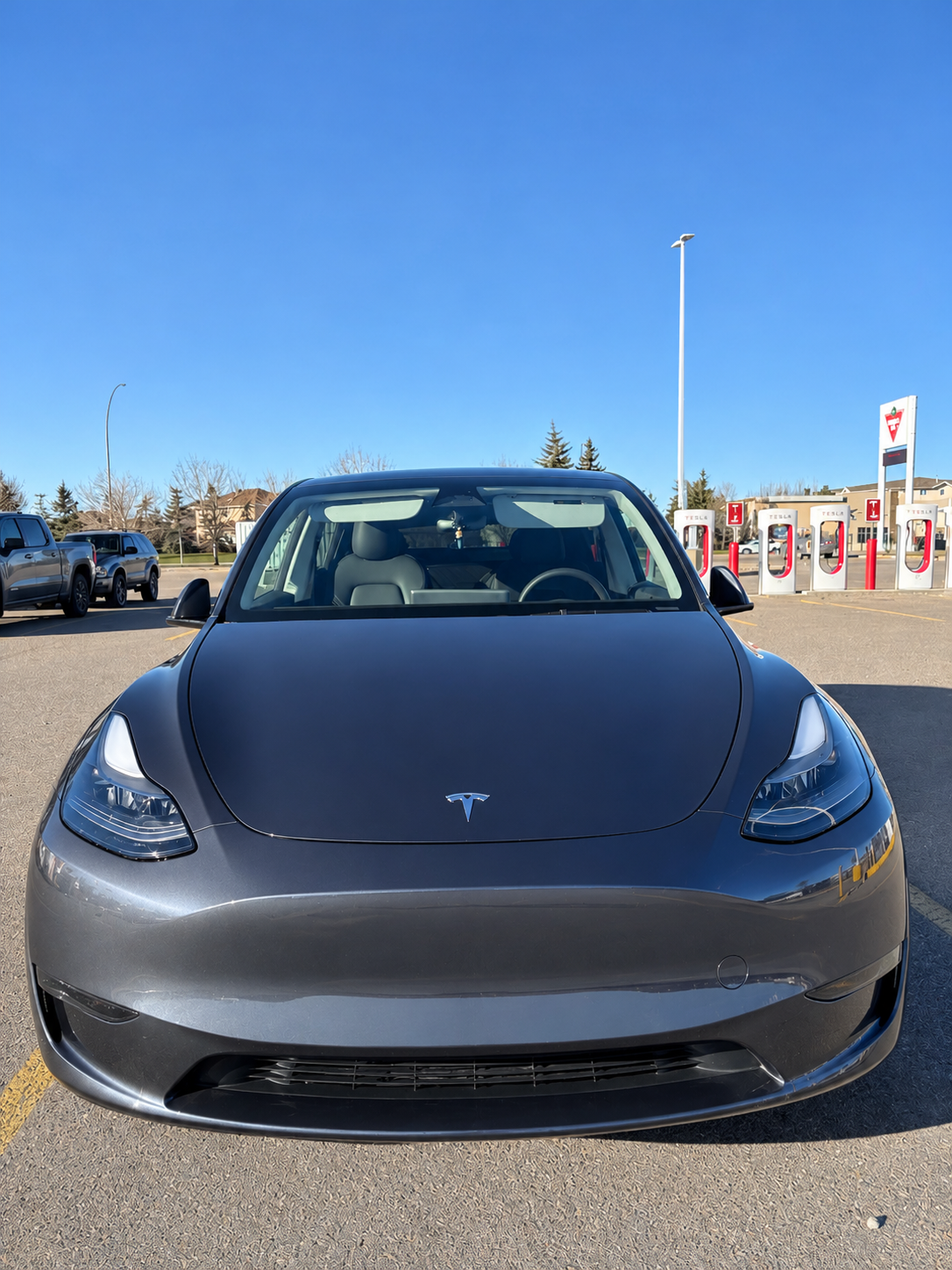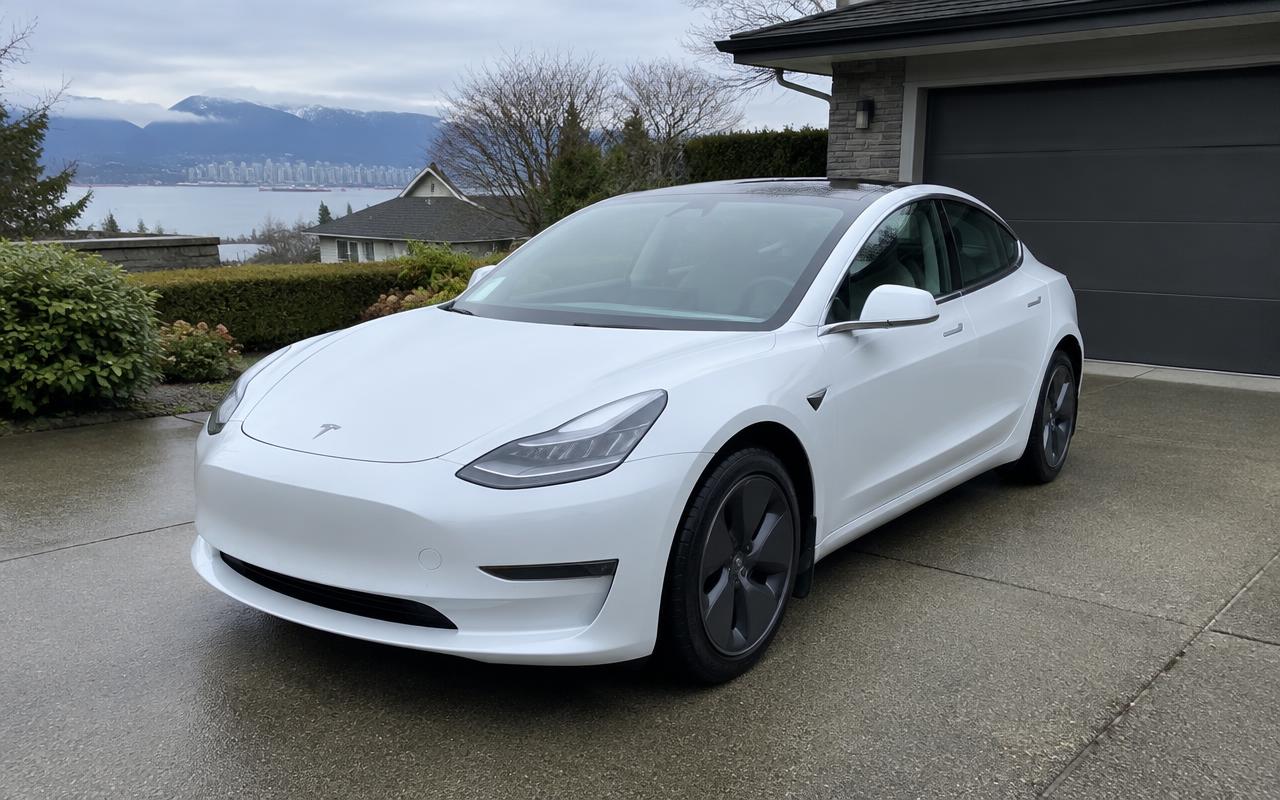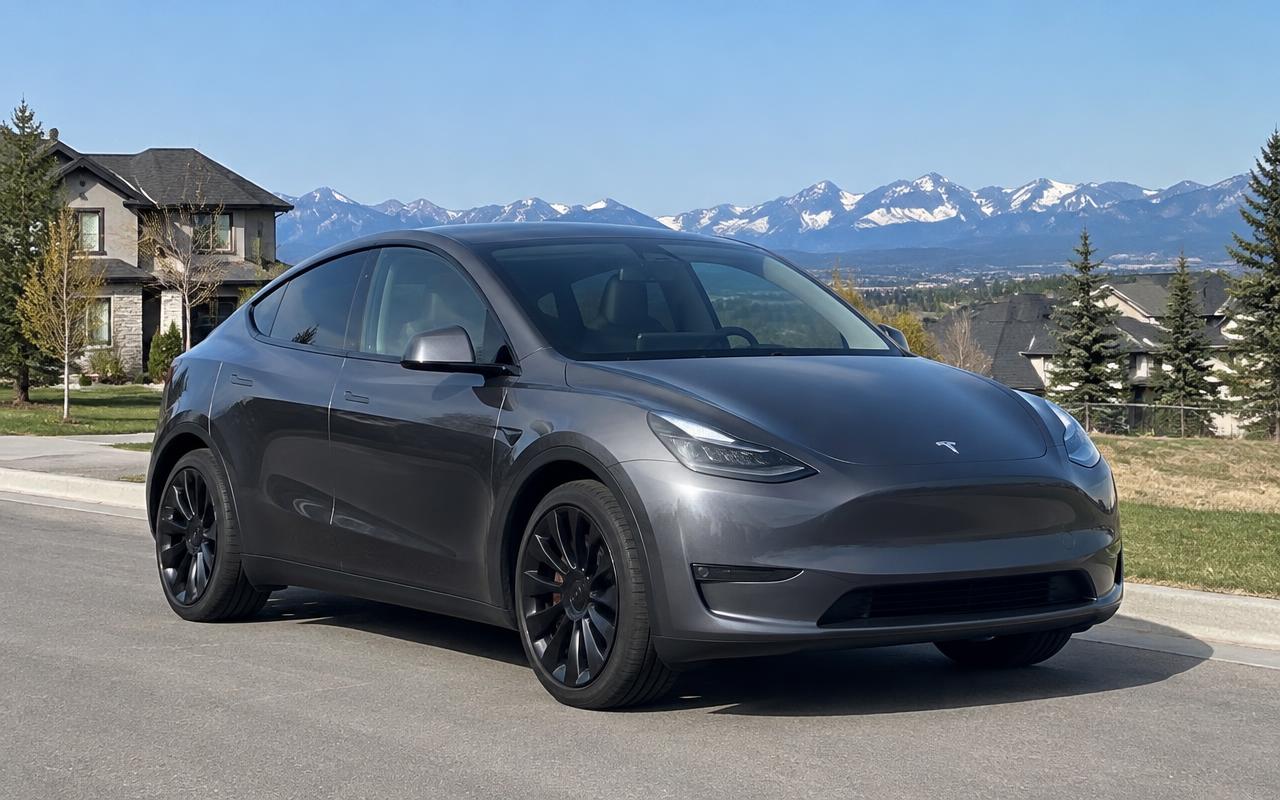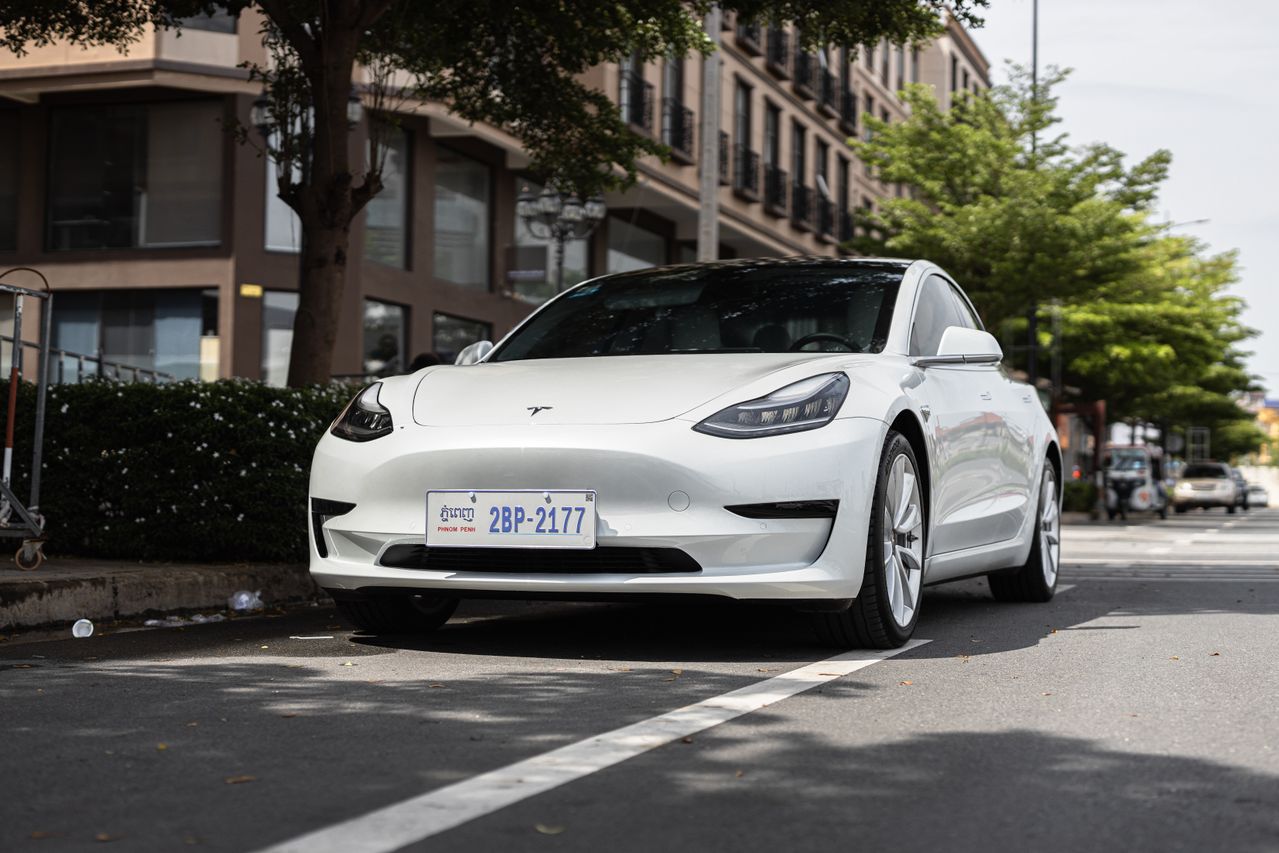
The Model 3 and Model Y are the two most common used EVs in Canada, and they share most of their parts, software and charging network. So the choice usually comes down to two questions: do you need the extra space, and is it worth roughly $10,000 more?
Quick answer: Buy the Model 3 if you want the most range and efficiency for the money and you don't regularly haul bulky gear. Buy the Model Y if you have kids, a dog, skis or a steep snowy driveway. The Y's hatchback and higher ground clearance make it a much easier car to live with in a Canadian winter. Their winter range losses are almost identical, so don't let range alone decide it. The real trade-off is price versus practicality.
The price gap on the used market
According to CarGurus.ca data, the national average used Model Y is about $42,047, and the 2022 model year has the most listings at around $40,920. A used 2021 Model Y averages about $35,017, and a 2020 about $31,440.
The used Model 3 is cheaper. CarGurus.ca puts its national average at about $29,124, with 2022 cars around $31,315.
That puts the gap at roughly $9,000 to $13,000 for cars of similar age, depending on the year and trim. That's a bigger gap than many buyers expect, and it's the main reason the Model 3 is such a strong value buy right now.
| | Used Model 3 | Used Model Y | |---|---|---| | National average used price | ~$29,100 | ~$42,000 | | 2022 average | ~$31,300 | ~$40,900 | | Body style | Sedan with trunk | Hatchback crossover | | Ground clearance (unladen) | 140 mm | 167 mm | | Cargo (seats up, incl. front trunk) | ~680 L | ~940 L | | Max cargo (seats folded) | Trunk pass-through only | ~2,100 L | | Third-row option | No | Yes (some 2021+ cars) |
Prices are a November 2026 snapshot from CarGurus.ca and change constantly.
Range and efficiency: the 3 goes further on the same battery
With the same 75 kWh usable battery, the 2022 Model 3 Long Range AWD is rated at 576 km and the Model Y Long Range AWD at 499 km. The Model 3 uses about 14 kWh per 100 km, against about 15.9 kWh for the Y. The sedan's lower, slipperier shape simply needs less energy at highway speed.
In practice, that means a Model 3 adds more kilometres per Supercharger stop, and your home charging bill is a bit lower. On a long prairie highway run, it's a real advantage.
Winter range: almost a tie
This is where many buyers expect a difference and don't find one. In Recurrent's verified winter range study, the Model Y Long Range lost about 15% of its range in freezing weather, and the Model 3 Long Range lost about 17%. Recurrent's later data on cars with heat pumps showed the Model 3 keeping about 87% of its range in freezing temperatures and the Model Y about 86%.
Two Canadian details matter more than the badge:
- Heat pump. The Model Y was Tesla's first car with a heat pump, from launch. The Model 3 only got one from the 2021 model year. A 2019 or 2020 Model 3 without a heat pump will lose noticeably more range in the cold.
- Ground clearance. Tesla's owner's manuals list 167 mm for the Model Y and 140 mm for the Model 3. That extra 27 mm (about an inch) is the difference between clearing an unplowed street and pushing snow with your front bumper.
For cold-weather numbers across more models, see how much range you really lose in winter.
Space and practicality: the Model Y's big win
The Model Y's hatchback is the single biggest reason people choose it. Tesla Canada lists the current Model Y at about 2,100 litres of total cargo space with the seats folded. Behind the rear seats, the Y holds about 33 cubic feet (roughly 940 litres) against about 24 cubic feet (roughly 680 litres) for the Model 3, both including the front trunk.
Numbers undersell the difference. The Model 3's trunk opening is narrow, and you can't easily load a bike, a dog crate or a hockey bag through it. The Y's wide hatch and flat floor make those jobs easy. The higher seats also make it easier to buckle a child into a car seat without crouching.
Some 2021 and newer Model Ys were built with an optional third row. It's tight and best for small children, but it exists, and the Model 3 has no equivalent.
Driving and comfort
The Model 3 sits lower and feels more connected on a winding road. The Model Y rides higher, which many drivers prefer in winter for visibility. Early Model Ys also had a firm ride that some owners found harsh on broken pavement, so a test drive on a rough road is worth doing.
Both use the same Supercharger network and the same app, and in Canada, both have built-in NACS ports, so charging is identical.
Battery health and warranty
Both cars carry the same Tesla battery warranty structure: 8 years, with 192,000 km for Long Range and Performance versions and 160,000 km for Standard Range and RWD versions, with a 70% capacity guarantee. The clock started when the car was first delivered.
Battery replacements are rare for both. In Recurrent's study, about 0.34% of Model 3s and 0.29% of Model Ys had needed a new battery. Still, always get a battery health reading on the specific car. See independent battery tests vs. the dashboard estimate.
Which one should you buy?
| Pick the Model 3 if... | Pick the Model Y if... | |---|---| | You want the most car for under $30,000 | Your budget stretches to $35,000–$45,000 | | You mostly commute, alone or with one passenger | You carry kids, car seats, a dog or sports gear | | You drive long highway distances | You live on a steep or rarely plowed street | | You care most about efficiency and driving feel | You want a hatchback and a higher seat |
If you're still undecided between the Y and other crossovers, our Model Y vs. Ioniq 5 comparison and our guide to the best used electric SUVs under $40,000 are good next reads. For model details, see The Breakdown: Tesla Model 3 and The Breakdown: Tesla Model Y.
Ready to shop? Browse used Tesla listings for sale across Canada.
FAQ
Is the Model Y worth the extra money over the Model 3?
If you regularly carry bulky items or passengers, or you deal with deep snow, yes. If you mostly commute and want maximum range per dollar, the Model 3 is the better value.
Which is better in Canadian winters?
Their winter range losses are nearly the same. The Model Y's higher ground clearance and hatchback make it more practical in snow, while the Model 3 goes further on a charge.
Do 2020 Model 3s have a heat pump?
No. The Model 3 got a heat pump starting with the 2021 model year. Every Model Y has one.
Sources: CarGurus.ca, used Tesla Model Y prices and model-year averages; CarGurus.ca, used Tesla Model 3 prices; Green Cars Compare, Model 3 LR vs. Model Y LR range and efficiency; Drive Tesla Canada, Recurrent winter range study; InsideEVs, Recurrent heat pump range data; AutoTrader.ca, 2020 Model Y review (heat pump); InsideEVs, Model Y owner's manual dimensions; Tesla Canada, Model Y specs; TSLNA, Model Y vs. Model 3 cargo; Business Insider, Recurrent battery replacement rates. Prices are a November 2026 snapshot.